Simple sensory ways to feel less overwhelmed (and more clear)
Dec 07, 2025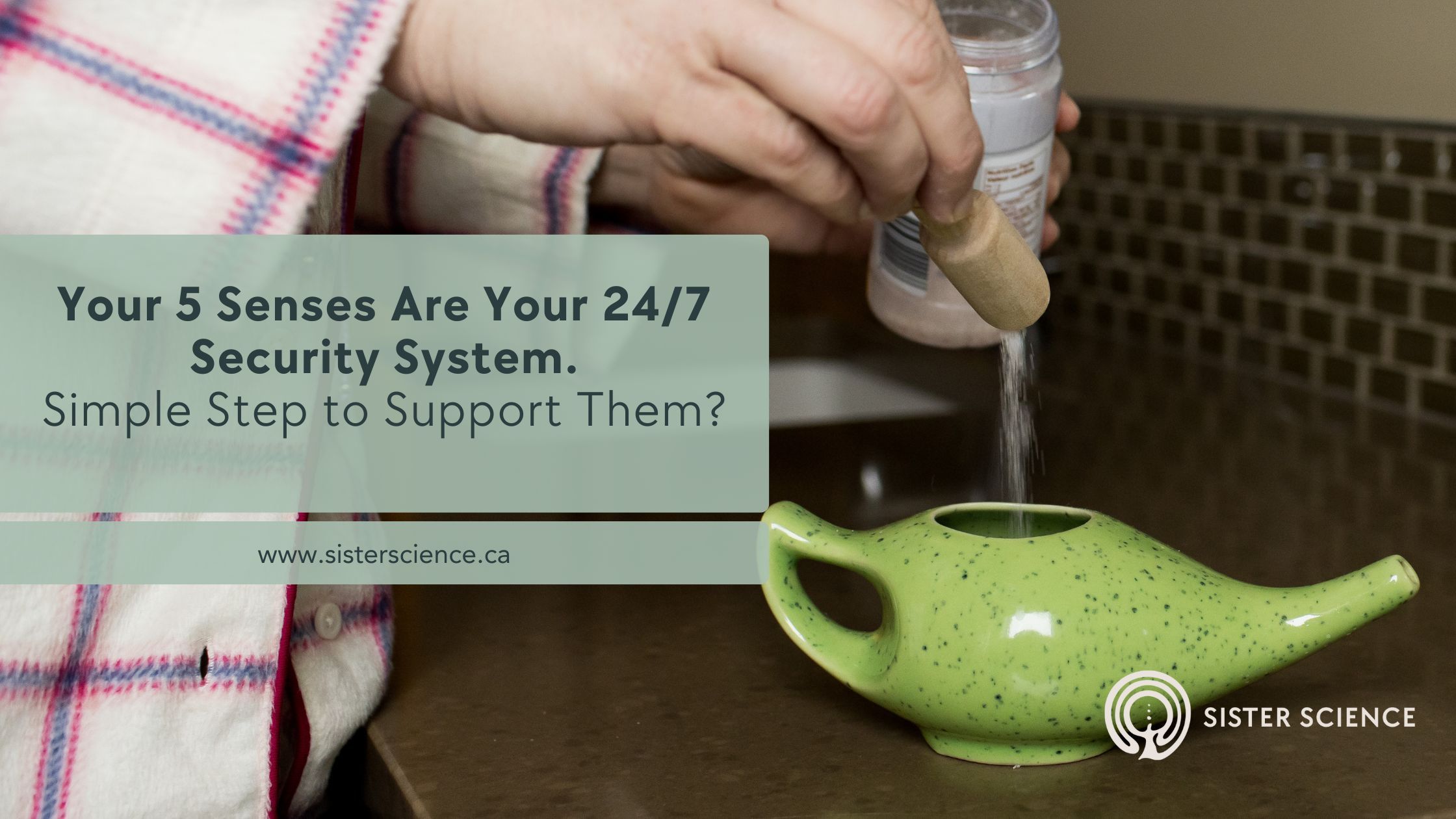
Your 24/7 Security System
Our sense organs are the primary ways we interface with the world - constantly taking in sights, sounds, touch, tastes, and smells, discerning what is nourishing and alerting you to danger. These organs work overtime in a world of sensory overload. Caring for them is essential to protecting our physical vitality, mental clarity, and emotional ease.
Besides brushing our teeth or throwing in some eye drops, we mostly don’t consider this modality of self care, and yet keeping them clean and clear is essential to our ability to interpret the world around us.
And in a world with a lot of messed up messaging. It is hard to swallow that commercial interests are purposely disrupting our sensory filters, requiring us to reclaim important basics:
- Physical practices that support and protect the organs themselves.
- Mental–emotional practices that give these gateways the downtime they need to rest, reset, and restore.
Digesting The World Around You.
Our senses are always “on.” They consume details at a pace far faster than the mind can process. Every detail needs to be digested. In Ayurveda, good digestion is king. We keep it working well, and are rewarded with health.
When our senses are overworked, our senses become fatigued, dull, or overreactive.
When senses are nourished and relaxed, they help us stay grounded, steady, and responsive instead of reactive.
Sense organ care asks us to:
- Strengthen the actual tissues and structure of each sense organ.
- Reduce overstimulation so the nervous system can relax and soften.
- Create healthy boundaries between what we choose to take in (consume) and what we allow to pass through.
- Come home to ourselves through conscious sensory engagement.
Let’s make this practical:
1. Eyes (Sight)
- Eye oiling: Apply a drop of warm ghee at the corner of each eye before sleep, pull on an eye mask and let your eyes rest.
- Rosewater Eye Cupping: hold cup over eye and blink, or gently spray and blink rosewater into dry or itchy eyes.
- Palming: Warm your hands and gently cup the eyes for 30–60 seconds.
- Screen breaks: Look 20 feet away for 20 seconds every 20 minutes.
- Nature: Anytime your eyes are looking at natural, organic sights you are soothing them.
- Trataka: rest your gaze on a live flame. Allow the fire to purify your vision, rest your mind, and anchor your attention. After a few minutes, close your eyes and focus on the afterimage in your closed eyes.
2. Ears (Hearing)
- Ear oiling: A few drops of warm oil in each ear canal once or twice weekly. Pop in a cotton ball to hold it in.
- Rim inner ear with an oily pinky finger after self massage
- Gentle ear massage: Trace the outer ear and jawline to open circulation.
- Sound hygiene: Reduce noise - loud, irritating, background, constant sound.
- Choose Healing Sound: Frequency/Hertz, Sound Bowl Vibrations, Binaural Beats, or Classical or Operatic Music that expands past the compressed, homogenized, small range that modern music offers.
3. Nose (Smell)
- Nasya: Apply 1–2 drops of warm oil at the nostril openings, sharp inhale to draw it in.
- Rim nostrils with an oily pinky finger after self massage
- Steam inhalation: Loosens congestion and hydrates tissues.
- Scent awareness: Favor natural smells over synthetic fragrances.
4. Mouth (Taste)
- Oil pulling: Swish sesame or coconut oil for 5–10 minutes in the morning.
- Brush Teeth and Floss: applies in Ayurveda too, although would offer Neem as toothpaste, allow your toothpaste to be as natural as possible
- Tongue scraping: Clears buildup and sharpens taste.
- Sip Warm Water All Day: Keeps the mouth, throat, and digestive track lubricated.
- Keep Taste-Bud Hijackers Out: You know the processed junk your body craves more of after just one bite.
5. Skin (Touch)
- Abhyanga (self-oil massage): Daily or weekly warm oil application. See full post for complete details.
- Dry brushing: Mindful exfoliation to stimulate lymph (not too much in our cold dry winter, or if you are a Vata person, this practice is best for Kapha people or those in humid warm climates)
- Human Touch: Safe, loving contact. Smiles, eye contact, hugs in community. Nourishing intimacy in private.
- Wear Comforting textures: Natural fibers, soft fabrics, warm layers.
Sensory Boundaries
When your senses are ON, they alert you quickly and effectively to any potential danger, you smell smoke, hear the alarm, feel the presence walking behind you, see the pothole before your trip on it. Most of us also have experiences where we had overloaded the senses and our reaction to danger wasn’t turned on at all. There is a reason for drinking and driving laws after all. Take this idea and really consider HOW you want your senses to support your wellbeing.
You support getting top-notch awareness from your 5 Senses when you care for them. And healthy 5 senses usually open up a powerful 6th sense too.
1. Limit What You Take In
Just because the senses can take in stimulation doesn’t mean they should. Limit what dulls, congests, overstimulates, numbs, distorts, gums up your senses or generally taxes your nervous system (i.e. our phones). What are you consuming that you can control? Where can we reduce or limit consumption that doesn’t support us?
2. Conscious Pauses
Build brief moments of sensory withdrawal into your day. Time allows digestion, when we take small rests in consumption we let the nervous system process the sensory input it has taken in.
3. Practicing Withdrawal of the Senses - Pratyāhāra
This is the yogic art of mindfully turning the senses inward. It doesn’t require meditation necessarily, it asks you to come inward. Focus on breath, closing or dropping eyes, allowing mind to settle.
This one feels to me, like coming in from a busy city street, picture the biggest city you can, bustling with activity. Entering through a big heavy door into a serene place - this can be into nature, a spa, or any metaphorical space where you are relaxed, safe, and can recuperate. I can feel my body release tension even as I write this invitation - moving through this door from busy to quiet. Take a deep breath when you let the door close behind you.
4. Emotional Rest for the Senses
I am not sure if senses trigger emotions, emotions trigger senses, or both. But there is a relationship here. To be present to them we need to create time and space. Reducing our multitasking busyness and sinking into single-pointed focus is so, so good for us. Taking time to name the feelings you are experiencing, and notice what sense feels most reactive, is the key step here. See what simple practice we have written here that might be useful.
In moments of transition - leaving Costco, arriving home after driving bad roads or lots of traffic, after an emotionally charged interaction - give yourself a breath to settle and reset your sensory mother-board helping you hold it all together.
Happy Healthy Senses
Our senses are doorways. Healthy sense organs allow us to experience the world with more delight, steadiness and connection. Clear discernment allows us to think clearly, have stable moods, reduce overwhelm, have greater presence in relationships and set good boundaries in all areas of life.
Simple sensory care practices prevent us from being manipulated by a profiteering world.
It is important stuff given the forces we face daily.
Bring it back to what we can control. What is simple and easy enough that we don’t need more resources or authority to do it. And then, love ourselves enough to follow through.
This isn’t always easy, but it is simple. If you want to dive in, and shift to this way of living, our Year of YOU is always here for you.
Xoxo
Jill.
Stay Connected with Sister Science
We hate SPAM. We will never sell your information, for any reason.